Table of Contents
- 1 Why This Recipe Works
- 2 What Makes This One Worth Trying
- 3 Ingredients
- 4 For the Potatoes
- 5 For the Gravy
- 6 Whole Spices for Tempering
- 7 Powdered Spices
- 8 Other Ingredients
- 9 Step-by-Step Instructions
- 10 Step 1: Prep the Potatoes
- 11 Step 2: Fry Until Golden
- 12 Step 3: Make the Masala Paste
- 13 Step 4: Build the Flavour
- 14 Step 5: Cook the Masala — Don’t Rush This
- 15 Step 6: Simmer the Potatoes
- 16 Step 7: The Finish
- 17 Tips That Actually Make a Difference
- 18 Mistakes to Avoid
- 19 Variations Worth Trying
- 20 What to Serve It With
- 21 Storage
- 22 Make-Ahead Tips
- 23 One Last Thing
- 24 Nutrition Facts
- 25 Frequently Asked Questions
Aloo Dum is one of those dishes that just works every single time. Golden fried potatoes in a spicy onion-tomato gravy — it’s simple, hearty, and packed with flavour.
I’ve made this so many times over the years, and honestly, the secret isn’t throwing in a bunch of spices. It’s about how you cook them.
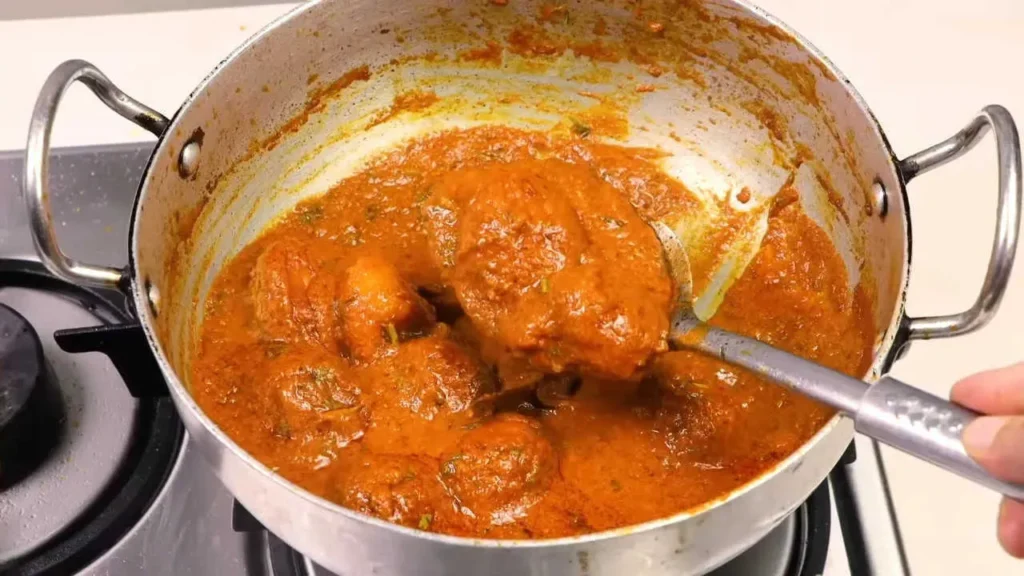
Fry the potatoes till they’re just lightly browned. Take your time with the masala — let it really cook down. Then let everything simmer together for a bit. That’s it. That’s where the depth comes from.
Serve it with roti, naan, jeera rice, or poori — it’s one of those meals everyone ends up asking for again.
Why This Recipe Works
Most Aloo Dum recipes online skip the real stuff or hide behind cream and butter. This one doesn’t.
Frying the potatoes first? Non-negotiable. Gives them a layer that soaks up the gravy instead of just sitting in it. And I always prick them with a fork before frying — tiny holes, big difference. Skip that and you’ve got bland centres.
For the gravy, I blend onions, tomatoes, ginger, garlic, chillies, and cashews into one smooth paste. No chunky bits, no cream needed — the cashews do the work.
The real game changer? Cook the masala till the oil separates. Don’t rush it. That’s what gives you deep flavour and that proper dhaba colour.
What Makes This One Worth Trying
- Thick gravy that actually clings to the potatoes, not one that pools at the bottom of the bowl
- Real dhaba-style flavor without needing a long shopping list
- Simple enough for a first-timer to follow
- Naturally vegetarian and gluten-free
- Works for a weeknight dinner or a festival spread
- Honestly tastes better the next day
- Easy to dial the spice up or down
Serve it with naan, lachha paratha, steamed rice, jeera rice, or crispy poori, it holds up with all of them. It’s proof that you don’t need complicated ingredients to make something that tastes special.
Before we start cooking, let’s go through the ingredients and why each one earns its place in this recipe.
Ingredients
Good Aloo Dum starts with understanding what each ingredient is doing, not just measuring it out. The list looks long, but almost everything here is a pantry staple you probably already have.
For the Potatoes
Serves 4- 13 medium Potatoes
- ½ cup Mustard Oil
- Salt to taste
Potatoes
Take medium size potatoes, they cook evenly. Big ones tend to go soft on the outside while staying undercooked in the middle. Baby potatoes work great too, and honestly look nicer on the plate. Pick ones that are firm with smooth skin, no green patches. Old potatoes turn grainy once cooked; fresh ones hold their shape.
Mustard Oil
Mustard oil is what gives this its dhaba-style edge. If the smell puts you off raw, don’t worry — once it’s heated properly, that sharpness disappears and you’re left with a nutty depth that works so well here. If you’d rather skip it, sunflower or any refined oil is a fine substitute.
For the Gravy
Serves 4- 2 medium Onions
- 2 medium Tomatoes
- 1 inch Ginger
- 10 Garlic Cloves
- 2 Green Chillies
- 10 Cashews
Onions
Onions give sweetness once they’re properly cooked down. This is where the real flavour of the curry comes from.
Tomatoes
Tomatoes bring the tang that cuts through the spices.
Ginger / Garlic Cloves
Fresh ginger and garlic add that warm, pungent kick you just can’t get from bottled pastes — trust me, I’ve tried.
Green Chillies
Green chillies give a fresh kind of heat.
Cashews
If you’re cooking for kids or want it mild, just use less or remove the seeds. Cashews are my little trick. Instead of loading up on cream, I use cashews. They make the gravy silky and rich without feeling heavy.
Once blended, they vanish completely — you won’t taste them, but you’ll definitely notice the gravy feels way smoother and better.
Whole Spices for Tempering
Serves 4- 1 tsp Cumin Seeds
- 2 bay Leaves
- 2 Green Cardamoms
- 1 Black Cardamom
- 10 Black Peppercorns
- 1 inch Cinnamon Stick
Whole Spices
This is where that first wave of aroma comes from — the smell that hits you before the curry’s even done. Whole spices release oils that powdered versions just can’t match.
Black cardamom especially adds a subtle smokiness that shows up in a lot of authentic dhaba cooking. One pod makes a real difference, don’t skip it if you have it.
Powdered Spices
Serves 4- 1 tsp Turmeric Powder
- 2 tsp Red Chili Powder
- 1 tsp Coriander Powder
- ½ tsp Roasted Cumin Powder
- ½ tsp Amchur
- 1 tsp garam masala
- Salt
Powered Spices
Turmeric gives color and earthiness. Kashmiri chili powder? That’s for the deep red—heat-free, so I never use regular chili powder. Coriander adds a citrusy pop. Roasted cumin brings smoky warmth.
Amchur (Mango Powder) cuts through with tang so the gravy isn’t dull. And garam masala? Stir it in at the very end—keeps the aroma sharp and alive.
Other Ingredients
Serves 4- 2½ cups Water
- Coriander Leaves
- 2 tsp Ghee
Water
Water controls how thick or thin your gravy ends up — start with 2½ cups and adjust from there.
Coriander Leaves
Coriander isn’t just for looks; it cuts through the richness.
Ghee
Ghee at the end — I think of it as the finishing touch. It melts into the hot curry and gives off that smell that instantly reminds me of my mom’s kitchen.
Even if you cooked everything else in oil, this small bit of ghee changes the final dish more than you’d expect.
Step-by-Step Instructions
Two rules with Aloo Dum: fry the potatoes right, and cook the masala till the oil separates. Screw either of these up and the curry falls flat. Simple.
Step 1: Prep the Potatoes
Wash, peel, rinse. Then prick each potato with a fork — all over. Looks pointless, but those tiny holes let the gravy seep inside later. Skip this and your potatoes will be bland in the middle.
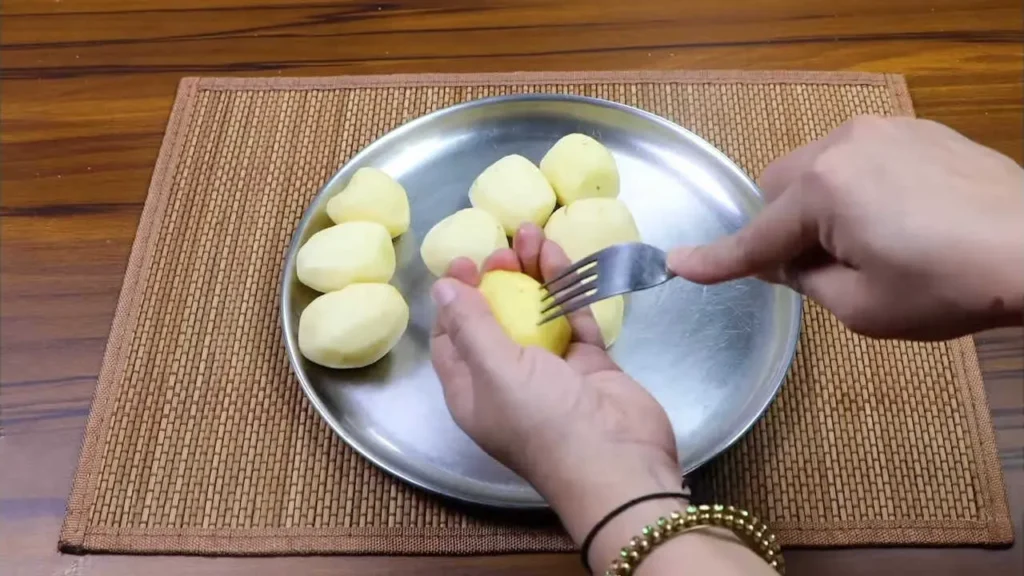
If using baby potatoes, prick gently. They’re small so they’ll soak up flavour fast anyway.
Step 2: Fry Until Golden
Heat mustard oil in a kadai till it lightly smokes — this takes away the sharpness and adds a nice nutty taste. Lower the heat a bit before adding potatoes.
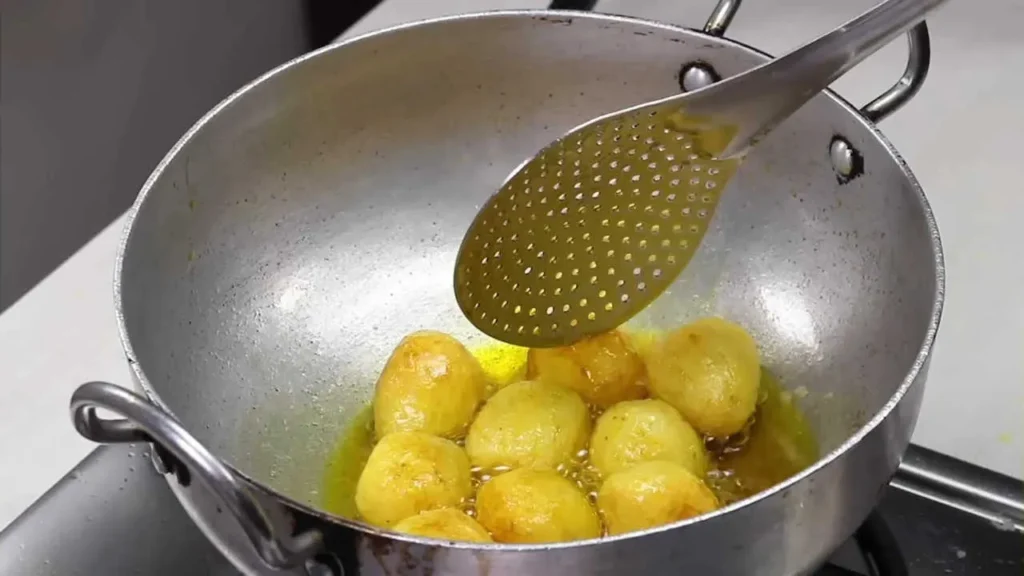
Fry in batches. Don’t crowd the pan or they’ll steam instead of crisp up. Turn them every couple minutes so they brown evenly. About 8–10 minutes till golden outside. They don’t need to be fully cooked inside — the gravy will finish them.
Drain on paper towels.
Step 3: Make the Masala Paste
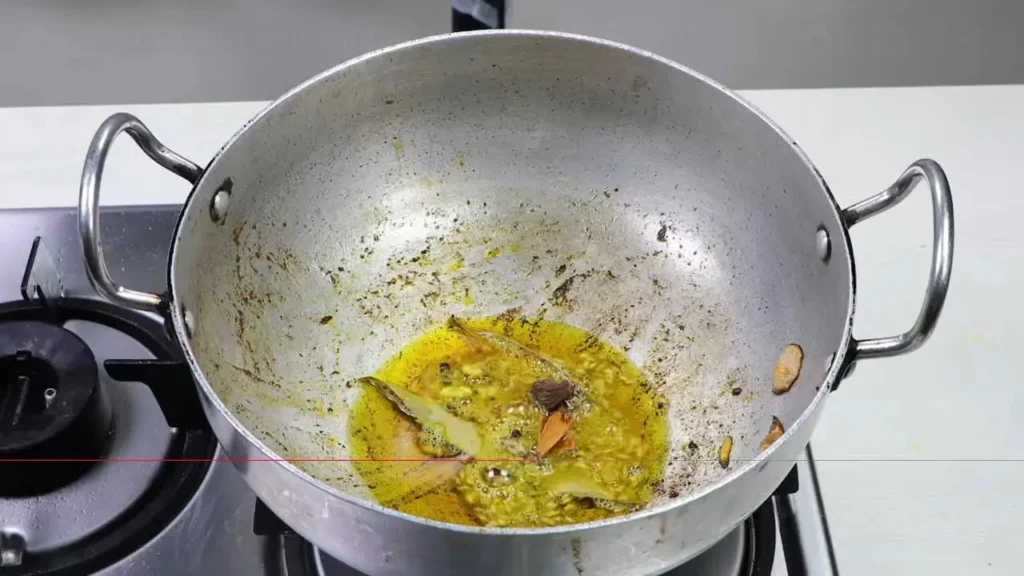
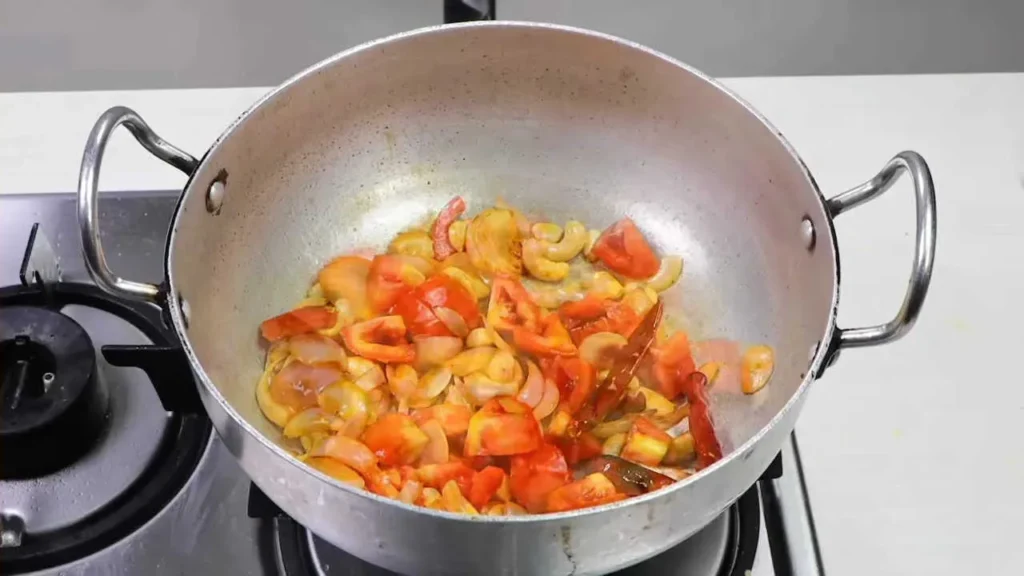
Leave about 2 tablespoons of oil in the kadai, pour out the rest. Toss in onions, ginger, garlic, chillies, and cashews. Cook on medium till onions soften and turn light golden — don’t rush this.
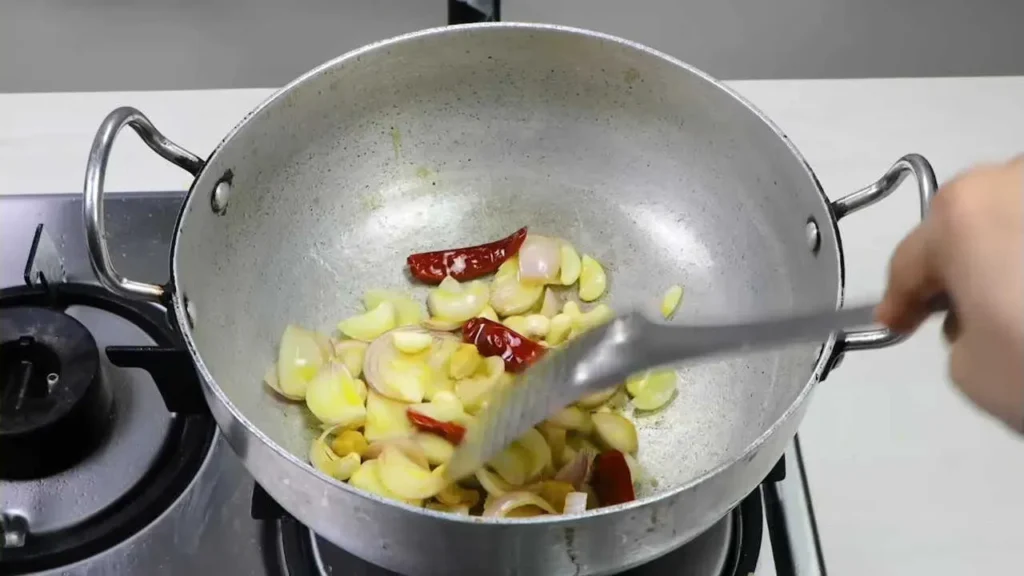
Add tomatoes. Cook till they break down into a thick pulp, not watery. Let it cool, then blend into a smooth paste. Don’t add water — thicker paste = richer gravy.
Step 4: Build the Flavour
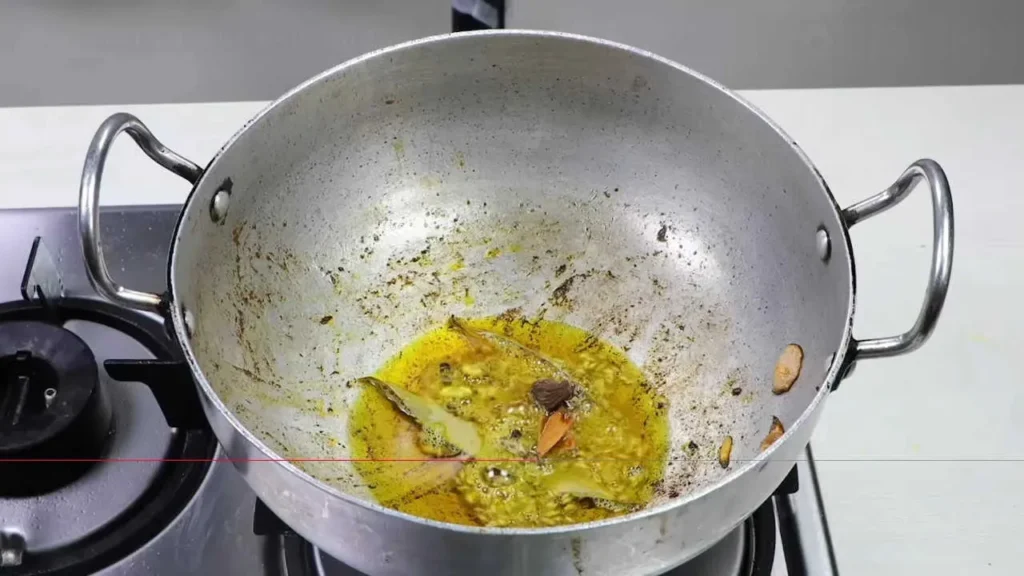
Heat a bit more oil. Add cumin, bay leaves, both cardamoms, cinnamon, and peppercorns. Let them crackle for a few seconds — that smell is everything.
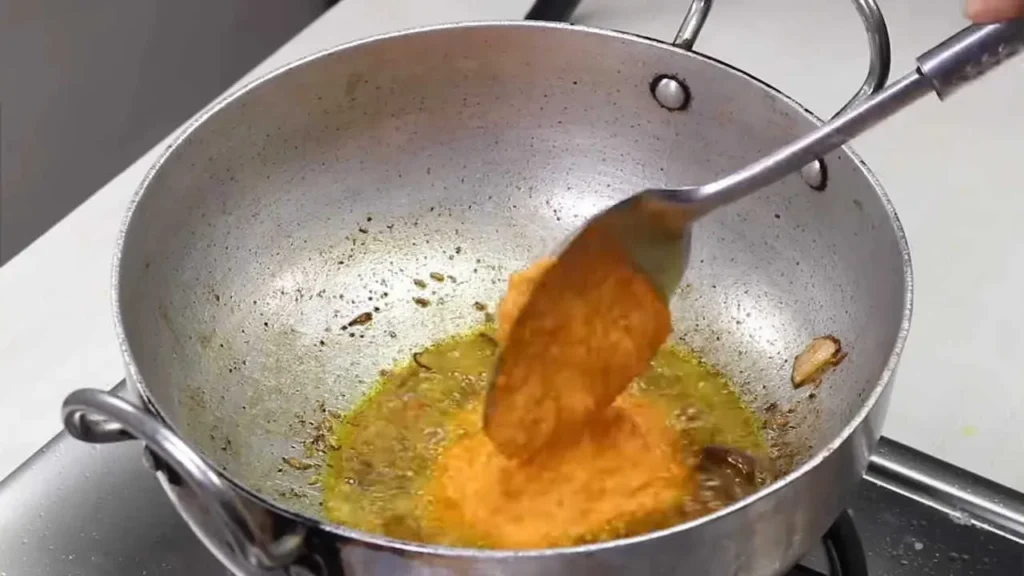
Pour in the onion-tomato paste. Stir for a minute so it doesn’t stick. Then add turmeric, chili powder, coriander powder, roasted cumin, amchur, and salt. Mix well.
Step 5: Cook the Masala — Don’t Rush This
This is where most people mess up. Cook on medium-low, stirring regularly. For the first few minutes it’ll look like nothing’s happening — wait it out.
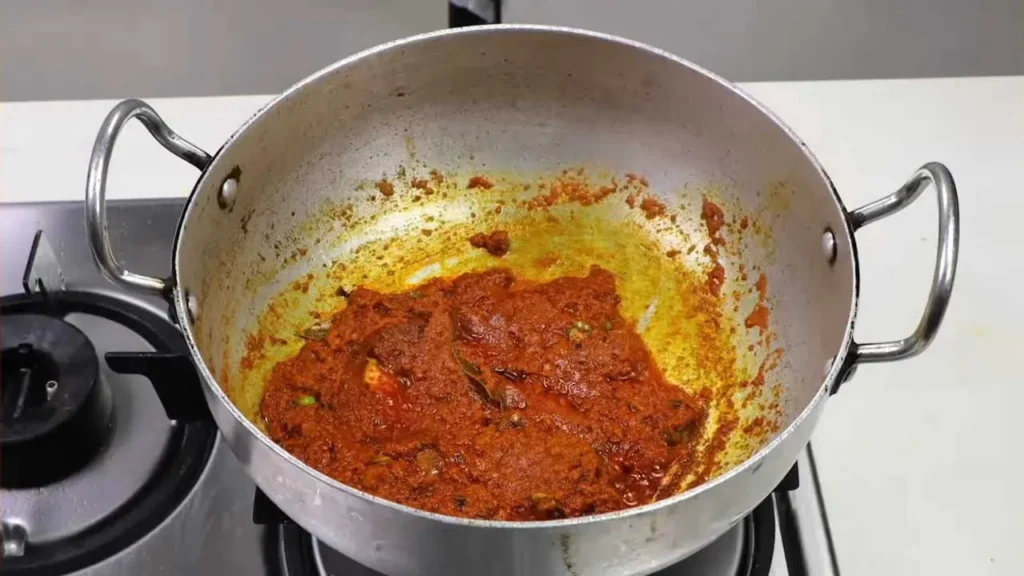
After 6–8 minutes, you’ll see oil droplets forming around the edges. That’s your sign. The colour deepens, the raw taste disappears, and the masala holds its shape when stirred.
I used to skip this step early on and my gravy always tasted thin and undercooked. Once I started waiting for the oil to separate, everything changed — without adding a single new ingredient.
Step 6: Simmer the Potatoes
Pour in about 2½ cups of hot water and stir. Hot water blends better and keeps the temperature steady. Bring to a gentle boil, taste, and adjust salt — the gravy should be slightly saltier than you want the final dish, since the potatoes will soak some up.
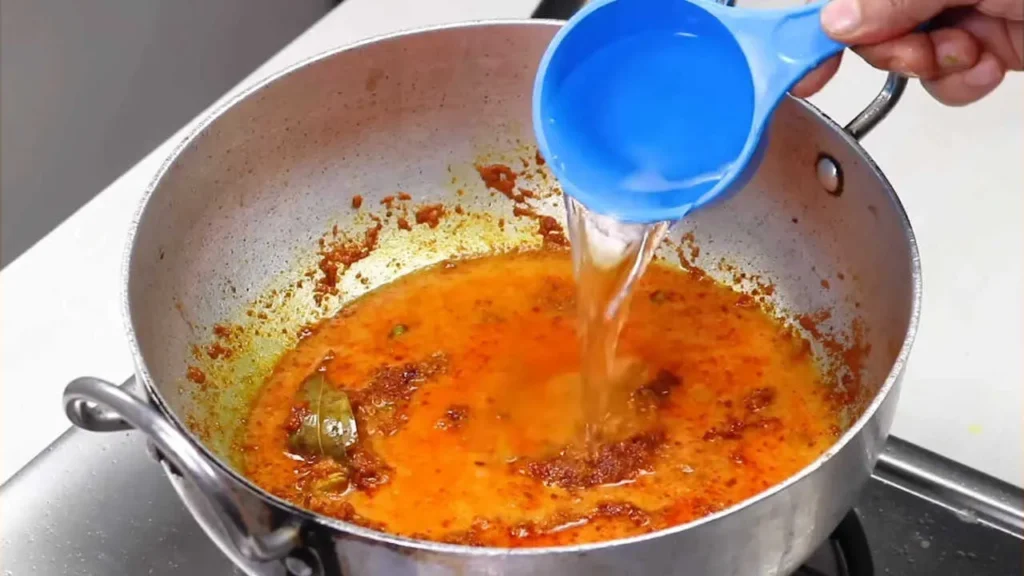
Add the fried potatoes, stir gently, lower the heat, cover, and let it simmer for 15–20 minutes. Stir once or twice — gently, or baby potatoes will break.
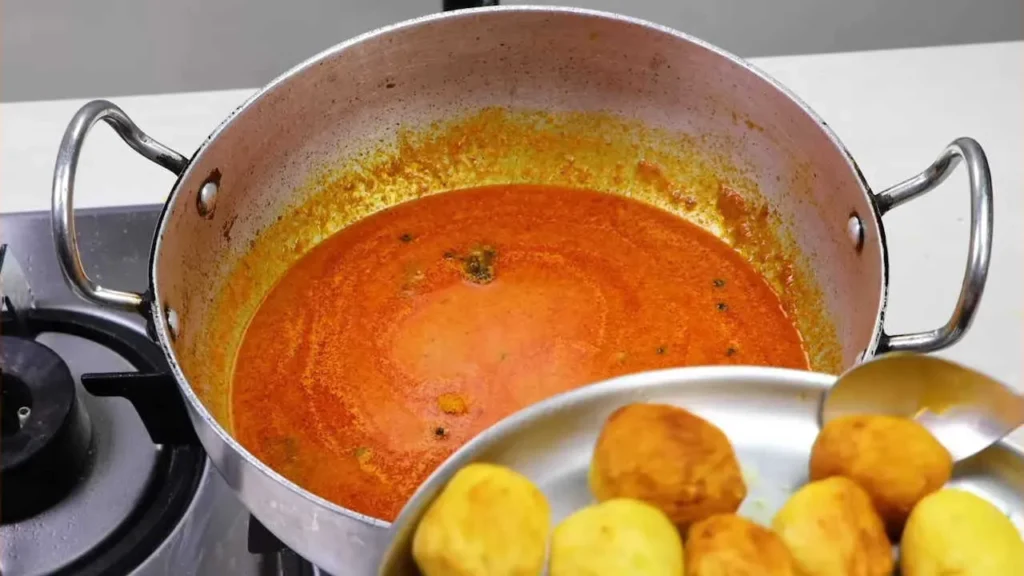
By the end, potatoes should be fork-tender and gravy should coat the back of a spoon. Too thick? Splash some hot water.
Too thin? Simmer uncovered a few more minutes.
Step 7: The Finish
Turn off the heat. Sprinkle garam masala, a handful of fresh coriander, and drizzle 2 teaspoons of ghee on top. Hot curry melts the ghee instantly and the smell is insane.
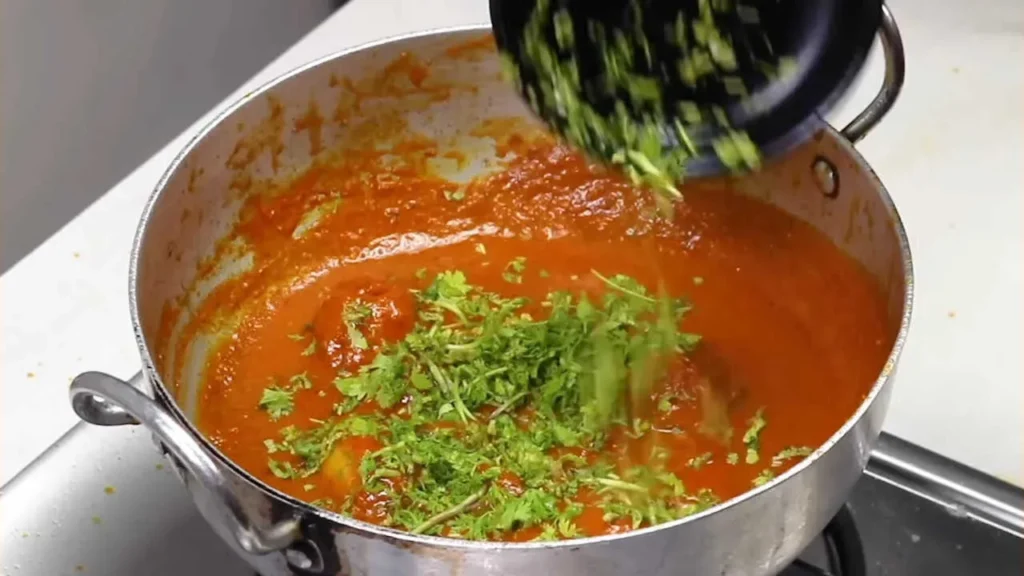
Cover and rest for 5 minutes before serving. That little wait lets the flavours settle and the potatoes drink up more gravy. This curry actually tastes better a few minutes after it’s off the heat.
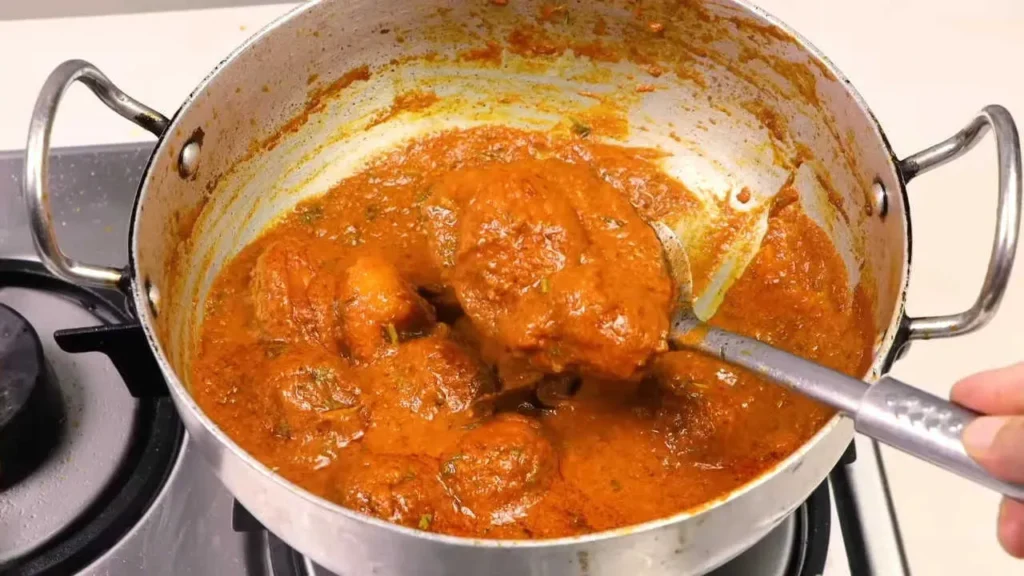
That’s it. Done.
Tips That Actually Make a Difference
- Use waxy potatoes if you want firm chunks. Starchy potatoes soak up more flavor but may break down with overcooking. Medium-starch varieties are a great all-round choice.
- Never skip pricking the potatoes — it’s the difference between seasoned-throughout and seasoned-on-the-surface.
- Wait for the masala to actually release oil. Stopping early is the most common reason people end up with a flat-tasting curry.
- Keep the heat at medium or lower. High heat browns the masala before it’s properly cooked, and you’ll end up with a faint bitterness.
- If your spice powders have been sitting around for over a year, replace them — stale spices are a bigger flavor killer than people realize.
- Give the curry 5–10 minutes to rest before serving for the best flavor.
Mistakes to Avoid
- Overcrowding the pan while frying, potatoes steam instead of browning
- Using mustard oil without heating it first, leaves a raw, sharp taste
- Adding too much water upfront, easier to thin a thick gravy than fix a watery one
- Frying the potatoes all the way through before adding them to the gravy, they’ll fall apart during simmering
- Stirring too often once the potatoes are in, a gentle touch keeps them intact
Variations Worth Trying
- Creamy Version: Stir in 2–3 tablespoons of fresh cream in the last few minutes for a richer, silkier finish.
- No Onion, No Garlic: Swap onions and garlic for extra tomatoes, a few more cashews, and a pinch of hing. Common during fasting periods and festivals.
- Smoky Dhaba Style: Place a small piece of hot charcoal in a steel bowl set inside the cooked curry, drizzle a few drops of ghee on it, cover immediately, and let it smoke for about two minutes. This is the closest you’ll get to actual roadside dhaba flavor at home.
- Baby Potato Version: Swap in baby potatoes for a prettier presentation, great for dinner parties.
- Extra Spicy: Add a couple of slit green chilies during the final simmer, or bump up the red chili powder slightly.
The method stays the same across all of these. Once you’ve got the base down, feel free to experiment.
What to Serve It With
Butter naan or garlic naan for the full restaurant feel. Tandoori roti or chapati for something lighter. Lachha paratha with a side of curd. Poori for a festive breakfast. Jeera rice, steamed basmati, or peas pulao when you want pure comfort food.
I usually round out the table with sliced onions, lemon wedges, cucumber salad, and chilled boondi raita, the cooling yogurt balances the spice nicely.
For guests, a garnish of fresh coriander, a drizzle of ghee, and a few ginger juliennes goes a long way for almost no extra effort.
Storage
Aloo Dum keeps well and honestly tastes even better the next day, as the potatoes keep absorbing the spices. Let it cool completely before storing in an airtight container.
When reheating, add a splash of hot water since the gravy thickens as it sits. Warm gently on the stove or in the microwave, stirring occasionally. Try not to reheat the same batch more than once, it does affect texture over time.
Make-Ahead Tips
If you’re cooking for a party or festival, do the prep a day early. Fry the potatoes and refrigerate them. Cook the masala until the oil separates. Store both separately in airtight containers.
When it’s time to serve, just heat the masala, add water, simmer the potatoes, and finish with garam masala, coriander, and ghee. Tastes just as fresh as if you made it that day.
One Last Thing
You don’t need any special ingredients for good Aloo Dum—just a bit of patience. Allow the potatoes to brown properly, cook the masala until it is rich, and let the curry simmer for a few extra minutes; it’s in that step that the true flavour is developed.
When you prepare this recipe, please leave a comment and let me know how it turned out; I should really like to know what you served it with.
Nutrition Facts
Per 1 servingFrequently Asked Questions
Yes — you can boil or air-fry them but frying gives better texture.
Medium, firm potatoes.
Usually too much water, or the masala wasn’t cooked long enough before adding liquid. Simmer uncovered a bit longer and it’ll thicken up.
Yes .
Yes.
No, It’s medium